
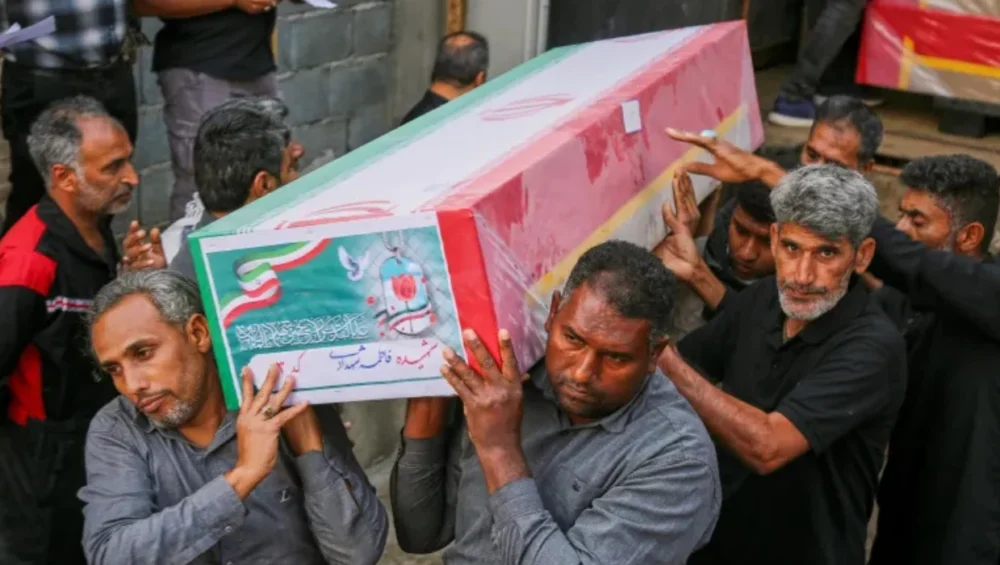
The imposition of War Crimes Law has been a focal point in the relations as the airstrike on Shajareh Tayyebeh primary school in Minab, Hormozgan province of Iran, on February 28, 2026, has become a focal point in diplomacy. Iranian officials claimed that 165 students, mostly girls between seven and twelve years old, were murdered in the morning classes as missiles hit the campus after 11:30 a.m. The school was located about 600 meters near a naval facility that was associated with the Islamic Revolutionary Guard Corps, an aspect that has been the focus of opposing legal discourses.
The attack happened as the US-Israeli campaigns against the Iranian military infrastructure were intensifying and active at the end of 2025. The previous campaigns were targeting nuclear and missile facilities after a controversial International Atomic Energy Agency report on enrichment of uranium. By the beginning of 2026, the war had gone beyond secret operations to open interactions, further increasing the risk envelope of civilian populations.
The number of casualties was changing fast during the post-incident days. First reports mentioned that there were a few dozen deaths, with the figure increasing to 165 confirmed cases at the end of the rescue operations. Judicial authorities in Iran gave three first hand accounts of direct impacts of the school compound by missiles. The funeral on March 2 and 3 attracted thousands, which highlights the national trauma of ushering in the incident.
The responses to it were cautious internationally. The U.S. officials said that American forces did not target a school intentionally, and Israeli officials recommended that military facilities located nearby complicated the task. These initial utterances formed the new debate of proportionality and distinction in terms of international humanitarian law.
Legal Architecture Governing Civilian Protection
The application of War Crimes Law has to be related to the developed yet politically limited scheme. The Geneva Convention and its Additional Protocols outlaw an assault on civilian objects except when they are utilized militarily. Article 52 of the additional protocol I specifically protects schools and educational institutions unless converted into lawful military objectives.
Certainly, Articles 8 of the Rome Statute of International Criminal Court stipulate that it is a war crime to intentionally target civilian objects. The fundamental legal issue in the case of Minab is on whether the school was still under civilian status or whether its location near the IRGC base changed the protection.
Distinction And Proportionality
The principle of distinction requires the attackers to distinguish between military and civilian objects. Proportionality evaluations should balance probable military benefit against the possible civilian casualties even in the situation where a legitimate military target is present in the vicinity.
According to legal experts, the mere concept of proximity does not invalidate civilian protection. Provided there were high amounts of children during the school period and intelligence tests showed their presence, proportionality would be prejudiced to a greater degree. The Iranian officials claim that the time of the attack during a morning shift when there are about 170 children indicates information about the concentration of civilians.
Precautionary Obligations
The precautionary obligations are also found in international humanitarian law. Assailants will need to identify targets and find ways and means that will not harm civilians to a great extent. Increases in precision-guided munitions and real-time surveillance have increased the expectation that states will be able to carry out more discriminating operations.
Critics have stated that higher strike cycles, in particular, those inspired by dynamic targeting models, can squeeze verification windows. The discussion is further overlapping with the expanding use of artificial intelligence to the process of targeting, where the Department of Defense guidelines revised in 2025 are increasing the use of AI-aided battlefield decision-making procedures.
Jurisdictional Constraints
The United States of America and Israel are not part of the Rome Statute and neither is Iran. The ICC may be able to exercise its jurisdiction either via state referral or UN Security Council. With such veto powers of permanent members, observers do not think there can be much referral by consensus.
The structural constraint is an expression of more extensive geopolitical fragmentation. Although the universal jurisdiction laws of some European states are theoretically aimed at domestic prosecution, in reality, the further advance of the case almost always depends on political considerations.
Western Sanctions And Accountability Friction
The additional complications of enforcing War Crimes Law include sanctions policy against the international judicial actors. In 2025, the U.S. administration extended sanctions against the officials of the ICC over its investigations of Middle East conflicts. The personnel were frozen in assets and placed under visa restrictions regarding situations that were viewed as politically-motivated.
The actions involved restrictions against ICC Prosecutor, Karim Khan and other employees performing initial investigations of supposed war crimes in Gaza. The actions were supported by Washington as a way to deal with what he referred to as institutional bias. Critics, though, believe that sanctions are chilling the independent investigations.
Institutional Deterrence Effects
The sanctioned officials of courts pose difficulties in terms of operational costs and movement. Law scholars argue that this will have an indirect effect on discouraging evidence gathering and participation of witnesses especially in politically sensitive cases.
The effects of this cumulative impact are not limited to one conflict. Should investigative agencies undergo repercussions of investigating cases that are related to influential states, the perceived universality of war crimes execution can be undermined. Analysts refer to this as structural asymmetry in accountability.
Allied Policy Alignment
The governments of Europe have not encountered much head-on collision in the area of sanctions, and they have demanded unbiased investigations. The diplomatic statements focus on caution and truth-seeking without overtly referring to war crimes. This is a calculated speech because it portrays a compromise between transatlantic conformity and international legal regulations.
Some of the EU states as well as Canada have internal war crimes statutes that allow prosecution under universal jurisdiction. But the political feasibility is often based on diplomatic considerations. The Minab strike therefore has become a case study as to whether the national courts will take steps when avenues of multilateral action fail.
Patterns Of Educational Targeting In Contemporary Conflict
The Minab incident has prompted renewed discussion about the idea of “scholasticide” which is a term applied by certain academic authors to refer to the systematic destruction of educational infrastructure in the course of armed conflict. In the mid-2025 United Nations reporting on Gaza recorded widespread demolition of school buildings as hostilities continued.
The comparative analysis shows that there are common law dilemmas: claims of dual-use infrastructure, conflicting casualty estimates, and contrary explanations regarding intent. In both instances, enforcement mechanisms have been failing to keep abreast with the developments at battle fields.
Technological Acceleration And Mens Rea
With the introduction of AI-assisted targeting, questions emerge on the intent, or mens rea, in the prosecution of war crimes. When it comes to selection of targets, even with the input of algorithmic systems, human decision-makers will be held accountable. Nonetheless, it can be more difficult to establish the knowledge and foreseeability.
The Minab strike was allegedly established in a condensed working schedule. The issue of whether or not the verification procedures were of precautionary standards is likely to constitute a portion of any independent investigation. Legal experts are now demanding that clear auditing guidelines be applied to assess AI-based targeting decisions.
Strategic Geography And Signaling
Hormozgan province occupies a strategic position near the Strait of Hormuz, a chokepoint for global energy flows. Strikes in this region carry both military and symbolic weight. Analysts interpret the Minab attack not only through a humanitarian lens but also as signaling within a broader deterrence framework.
The intersection of strategic geography and civilian harm complicates legal assessments. Military planners may view proximity to naval assets as operationally significant, while legal authorities prioritize civilian immunity.
Diplomatic Repercussions And Emerging Mechanisms
Enforcing War Crimes Law in the aftermath of Minab will likely depend on evolving multilateral configurations. The United Nations Human Rights Office has called for an independent investigation, and UNESCO officials described the attack as “horrific” in statements urging protection of educational institutions.
Iranian diplomats have pledged that the incident “will not go unpunished,” signaling intent to pursue international avenues. Whether through Security Council debate, General Assembly initiatives, or alternative coalitions such as BRICS legal forums, Tehran may seek venues beyond traditional Western-led institutions.
At the same time, U.S. and Israeli officials maintain that operational decisions complied with applicable law. The divergence in narratives underscores a broader systemic tension: enforcement mechanisms rely on cooperation among states whose strategic interests often diverge sharply.
As technological acceleration, geopolitical rivalry, and sanctions regimes reshape the legal landscape, the Minab strike highlights how enforcement credibility depends not only on codified norms but on political will. The durability of Enforcing War Crimes Law may ultimately hinge on whether emerging coalitions can insulate investigative processes from power politics, ensuring that accountability frameworks adapt to twenty-first-century conflict without losing the principles that anchor them.