
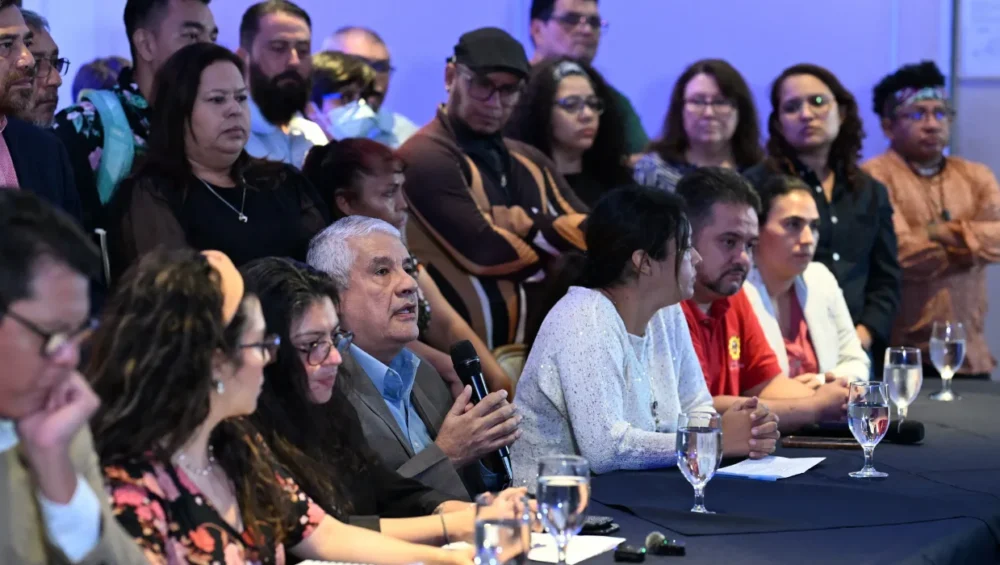
El Salvador’s Foreign Agents Law, approved on May 20, 2025, by the Legislative Assembly dominated by President Nayib Bukele’s New Ideas party, has rapidly emerged as one of the most controversial and repressive pieces of legislation in the country’s recent history. Passed with 57 votes in favor and virtually no public consultation, critics argue the law was rushed into force precisely because political opposition and independent voices have been systematically weakened under Bukele’s rule.
The government claims the law’s purpose is to “promote transparency” in foreign funding and defend national sovereignty by regulating those who receive international resources. But beyond the rhetoric, the law establishes a suite of intrusive requirements and penalties that place civil society, independent media, and human rights defenders under direct government control.
What the Law Actually Does: Broad Reach, Deep Constraints
Under the Foreign Agents Law, any individual or organization that receives funding from abroad, whether directly or indirectly, must register with the new Registry of Foreign Agents (RAEX) within the Ministry of the Interior. Once registered, entities must pay a 30% tax on all foreign funds received — a punitive rate far above ordinary tax levels — and submit to continuous supervision, detailed financial reporting, and labeling of all communications as “foreign agent funded.”
RAEX holds sweeping authority to determine who qualifies as a foreign agent, including the power to define a “foreign principal” not only as governments or NGOs abroad but as “any person or organisation” it chooses to classify as such. This ambiguity gives authorities near-total discretion to target critics and independent actors.
Entities found in violation of the law face sanctions ranging from fines between $100,000 and $250,000 to freezing of bank accounts, suspension of operations, or outright dissolution. The law even allows revocation of legal status without independent judicial review, meaning organizations may be shut down on the basis of executive discretion alone.
Civil Society on the Brink: Thousands of Organizations at Risk
El Salvador has an active civil society sector with approximately 8,000 registered non-governmental organizations, many of which rely on foreign funding to carry out humanitarian, social, legal, and human rights work. These groups warn that a 30% tax on foreign donations — often the lifeblood of their operations — will force many to reduce services or close entirely.
Journalism associations are already feeling the impact. In October 2025, the Salvadoran Journalists Association (APES) announced it would go into exile after suspending and closing projects reliant on foreign funds, saying the RAEX registry and its obligations make independent operation impossible.
Local and international press freedom advocates have described the law as a blatant attempt to stifle independent reporting by stigmatizing foreign-supported media and forcing disclosure of foreign ties — effectively discouraging international collaboration and exposing journalists to arbitrary sanctions.
A Pattern Seen Elsewhere: Lessons From Russia, Nicaragua, Venezuela
Human Rights Watch and other rights groups have noted that El Salvador’s law mirrors similar “foreign agent” regimes used in Russia, Nicaragua, and Venezuela, where governments have weaponized regulatory frameworks to suppress dissent and control civic space.
In Russia, for instance, foreign agent laws have been ruled to violate fundamental rights by European human rights bodies, which found that stigmatizing labels and punitive restrictions impede freedom of expression and association.
Critics argue that Bukele’s law represents a troubling convergence with these authoritarian models, enabling creeping criminalization of fundamental civic activities under the guise of national security and transparency.
This pattern reflects a broader regional rollback of civic space, where legal mechanisms replace overt censorship but achieve similar effects by choking financial viability and imposing chilling compliance costs on independent actors.
Eroding International Obligations and Civil Liberties
International human rights law protects freedoms of association, expression, and access to information — rights El Salvador has pledged to uphold under instruments such as the International Covenant on Civil and Political Rights (ICCPR) and the American Convention on Human Rights. Any restrictions on these rights must be necessary, proportionate, clearly defined, and subject to judicial review. The broad, vague language and unfettered enforcement powers granted to RAEX, critics contend, flout these requirements.
Amnesty International warned that the law institutionalizes the persecution of civic actors, describing it as part of an “authoritarian escalation” that reinforces the shrinking of civic space and neutralization of independent voices. The law’s sanctioning powers, lack of judicial oversight, and administrative obstacles directly threaten the autonomy and survival of civil society.
Regional and International Backlash Grows
International bodies have registered deep concern about the law’s impact. The European Union has expressed regret over its adoption, highlighting its potential to restrict civil society’s access to funding — a core component of democratic participation — and urging El Salvador to uphold its human rights obligations.
International and regional NGO coalitions, including the Committee to Protect Journalists alongside more than 20 freedom of expression and human rights groups, have jointly called for repeal of the law, warning it risks undermining democracy and press freedom. Human Rights Watch’s Americas director explicitly stated that labeling critical organizations as foreign agents and imposing heavy taxes will stifle dissent rather than promote transparency.
Legal bodies such as the New York City Bar Association and the Vance Center for International Justice have also condemned the law, urging the Salvadoran government to align its regulations with international standards and cautioning that punitive measures against civil society and human rights defenders could have international legal repercussions.
A Wider Crackdown on Civic Space
The Foreign Agents Law is part of a broader trend in El Salvador where civil liberties have been progressively curtailed. Authoritarian shifts in recent years — including extended pretrial detention under state-of-emergency measures linked to gang crime — have accompanied legal frameworks that concentrate power in the executive and undermine checks and balances.
By targeting not only organisations but individual actors — from journalists to legal advocates — the law creates a climate where self-censorship and organizational collapse become likely outcomes. With the RAEX regime in place, even inadvertent receipt of minor grants or fees from foreign sources could trigger punitive action, jeopardizing the work of social initiatives that serve vulnerable communities.
A Governance Crisis With Regional Ramifications
El Salvador’s Foreign Agents Law demonstrates how legal instruments can be repurposed to national political ends, effectively reducing civic space and strengthening executive control. The ambiguity of terms like “public order” and “national stability,” combined with harsh financial penalties, allows the state to label virtually any criticism or independent initiative as a threat.
As civil society groups struggle to adapt or relocate abroad, the law underscores a troubling reality: in the absence of judicial independence and robust institutional safeguards, rights enshrined on paper are hollowed out in practice.