
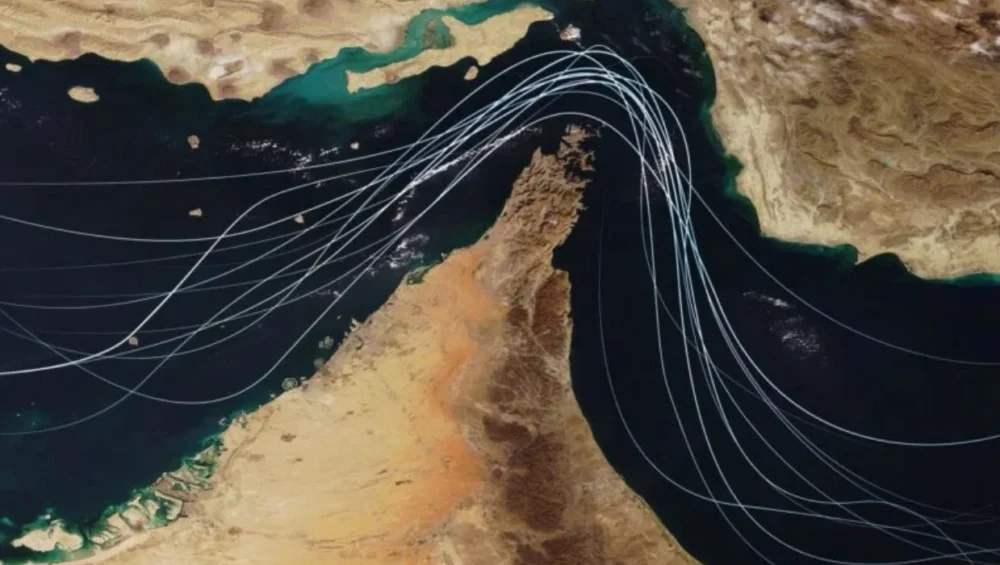
Desalination Threats have become a central element in the escalating rhetoric surrounding the Strait of Hormuz crisis in 2026. President Donald Trump warned that the United States could strike a range of Iranian infrastructure, including power stations, oil facilities and possibly desalination plants, if Iran does not restore normal shipping through the strait by early April. The statement marked a notable shift from general warnings about energy targets to explicit references to water supply systems.
Analysts interpret the language as part of a broader attempt to apply pressure at multiple levels simultaneously. Iran’s economic stability depends heavily on oil exports passing through Hormuz, while coastal population centers increasingly rely on engineered water systems as drought conditions continue. Mentioning both energy and water infrastructure in the same message expands the perceived leverage Washington seeks to establish during the standoff.
The rhetoric also reflects how infrastructure has evolved into a central battlefield in modern geopolitical confrontations. Energy facilities were already prominent targets during the tensions that escalated in late 2025, but the introduction of desalination plants into strategic discussions has raised new questions about the limits of coercive diplomacy.
Legal boundaries surrounding infrastructure targeting
Legal scholars quickly examined the implications of Desalination Threats under international humanitarian law. The debate centers on whether facilities providing potable water to civilians can ever be treated as legitimate military objectives.
Civilian survival protections under international law
The Geneva Conventions and related legal frameworks emphasize the protection of resources essential to civilian life. Drinking water installations are widely recognized as falling within that category, particularly in regions where natural freshwater sources are scarce. Desalination plants along the Gulf coastline supply water to millions of residents and function as a critical component of urban infrastructure.
Human rights observers have argued that intentional attacks on such facilities could be interpreted as violations of established legal norms. Researchers from advocacy groups have noted that destroying water systems risks creating humanitarian crises rather than delivering clear military advantage. These concerns became more visible during the debates following infrastructure damage reported in regional conflicts during 2025.
The discussion has also drawn attention to the legal concept of intent. When senior officials publicly identify facilities that sustain civilian populations, analysts say it becomes easier to evaluate whether such targets are being considered primarily for military purposes or for broader coercive pressure.
Dual-use debates and proportionality standards
U.S. officials and some military analysts emphasize that certain infrastructure assets can serve both civilian and military functions. Desalination facilities may provide water to nearby industrial complexes or security installations, creating arguments that they hold strategic value. However, international law requires commanders to weigh potential military benefit against the expected harm to civilians.
This proportionality assessment has become a central focus of the legal debate. In arid regions such as Iran’s southern provinces, desalination plants often supply large populations that have few alternatives. The loss of such capacity could produce long-term shortages that extend well beyond the immediate conflict zone.
Legal experts studying similar cases in recent years note that courts and international bodies increasingly examine whether the anticipated military advantage is concrete and direct. If the humanitarian consequences are likely to be widespread and prolonged, the justification for targeting such facilities becomes difficult to sustain under established norms.
Evolution of the Hormuz crisis since 2025
Understanding the emergence of Desalination Threats requires examining the sequence of events that intensified tensions in the previous year. The strategic environment surrounding Hormuz has been shaped by disruptions to energy routes and regional security concerns since late 2025.
Infrastructure confrontations during 2025
In November 2025, restrictions on shipping through the Strait of Hormuz and clashes linked to regional proxy conflicts heightened fears about global energy supply. The United States responded with strikes on Iranian energy-related infrastructure, including facilities connected to oil refining and transport. Those actions prompted criticism from international observers who warned about the indirect effects on civilian services tied to energy networks.
The experience influenced strategic thinking entering 2026. Policymakers began to view infrastructure pressure as a way to influence adversaries without direct large-scale confrontation. Energy systems were the first focus of that approach, but the expansion of rhetoric toward desalination plants indicates a widening scope of potential leverage.
This shift also reflects growing awareness of the interconnected nature of regional infrastructure. Damage to one sector often cascades into others, particularly where electricity, fuel supply and water production depend on shared systems.
Deadlines and negotiation signals
Trump’s warning included a deadline linked to the reopening of Hormuz, extending earlier timelines issued during the standoff. Reports suggested that an initial short timeframe evolved into a later target date in early April, leaving room for diplomatic engagement while maintaining visible pressure. Such deadlines are often interpreted as signals aimed at shaping negotiation dynamics rather than immediate operational plans.
At the same time, Washington indicated that indirect discussions involving intermediaries might be underway, although Iranian officials denied the existence of direct talks. This divergence echoes patterns observed during 2025 when negotiations and military posturing occurred simultaneously. The coexistence of dialogue and threats has become a defining characteristic of the current confrontation.
Regional vulnerabilities and humanitarian implications
Desalination Threats resonate strongly across the Gulf region because many countries rely heavily on the same type of water infrastructure. Analysts note that targeting such facilities could have consequences far beyond Iran’s borders.
Dependence on desalination networks
Gulf states collectively produce a substantial portion of the world’s desalinated water, supporting rapidly growing cities and industrial zones. Coastal populations depend on these systems not only for drinking water but also for sanitation, healthcare and economic activity. Any disruption to regional desalination capacity can therefore create cascading challenges across multiple sectors.
Iran’s own water stress heightens the sensitivity of the issue. Years of reduced rainfall and overuse of groundwater have increased reliance on engineered solutions, particularly in coastal regions. Experts studying environmental trends warn that climate pressures may intensify these vulnerabilities in the coming decade.
Because desalination plants are often located near strategic maritime routes, they also sit within potential conflict zones. This geographic overlap means that any escalation in the Hormuz area carries inherent risk for water supply systems.
Risks of retaliatory escalation
Iranian officials have warned that attacks on critical infrastructure would provoke responses affecting facilities across the Gulf. Analysts highlight that such retaliation could include strikes on energy installations or water plants in neighboring states, many of which operate interconnected supply networks. This possibility has prompted quiet diplomatic engagement among regional governments seeking to prevent a wider crisis.
Economic repercussions are another concern. The Strait of Hormuz handles a significant share of global oil shipments, and tensions there already influence energy markets. If infrastructure threats extend beyond energy into water systems, investors may interpret the situation as a deeper regional instability rather than a limited maritime dispute.
Interpreting U.S. strategic intent
The debate surrounding Desalination Threats ultimately centers on how observers interpret Washington’s broader strategy in the Hormuz confrontation. Analysts are divided over whether the rhetoric represents a calculated negotiating tactic or signals a readiness to expand the scope of conflict.
Deterrence through expanded pressure
Supporters of the administration’s approach argue that explicit warnings can deter adversaries by demonstrating the potential costs of continued escalation. By mentioning infrastructure critical to economic and social stability, the United States may be attempting to signal that further disruption of maritime routes will provoke consequences affecting Iran’s broader national capacity.
This interpretation aligns with earlier strategies employed during periods of heightened tension, where pressure on infrastructure was used to accelerate diplomatic engagement. Observers point out that during 2025, some operations focused on energy assets were intended to influence negotiations rather than trigger sustained conflict.
Domestic and institutional constraints
At the same time, several factors limit how such threats might translate into operational decisions. U.S. military planning involves legal reviews under the law of armed conflict, and orders that raise significant humanitarian concerns are subject to scrutiny within the command structure. Congressional oversight, particularly regarding the War Powers framework debated again after events in 2025, also shapes the environment in which military action occurs.
These institutional checks contribute to the view among some analysts that public rhetoric may serve as a negotiating instrument rather than a direct operational blueprint. Even so, the explicit nature of the statements has intensified scrutiny from legal scholars and international observers who monitor the evolving boundaries of warfare involving civilian infrastructure.
As the deadline associated with the Hormuz standoff approaches, the attention focused on desalination facilities illustrates how modern conflicts increasingly revolve around systems that sustain daily life as much as traditional military assets. The question facing policymakers and legal experts alike is whether the growing prominence of water infrastructure in strategic messaging represents a temporary tactic in a tense negotiation or an early sign that future conflicts may test the resilience of civilian lifelines in ways that reshape how international law and deterrence interact in a resource-constrained world.