
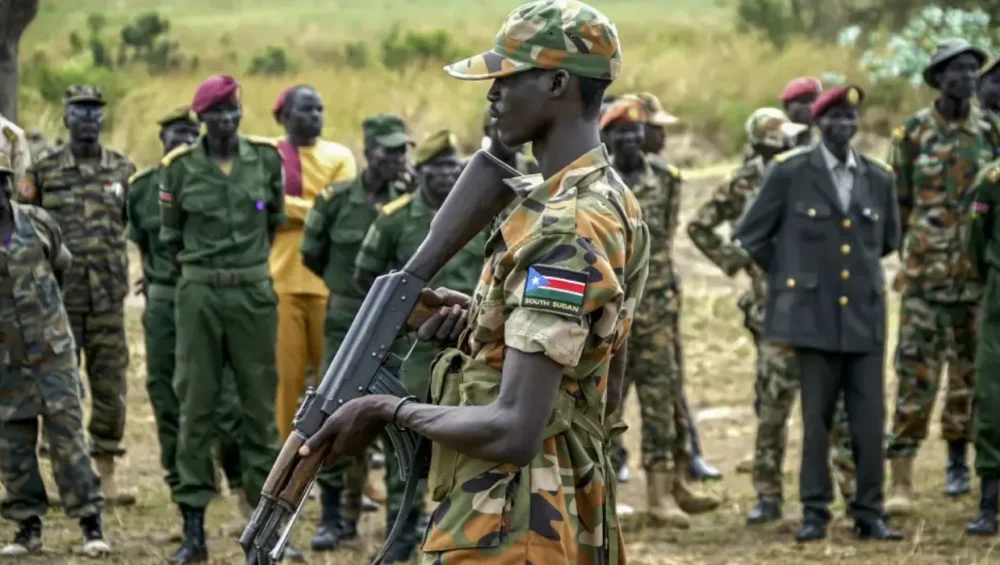
On January 25, 2026, the government forces in South Sudan ordered the evacuation of civilians, humanitarian staff, and United Nations personnel from opposition-controlled zones in Jonglei state in preparation for an impending military operation. The operation targets counties such as Nyirol, Uror, and Akobo, among others, and is taking place against the backdrop of intensified fighting that has already resulted in the displacement of tens of thousands of people.
The government’s Operation Enduring Peace seeks to flush out opposition forces, including breakaway groups of the Sudan People’s Liberation Army in Opposition (SPLA-IO) and their allied militias, particularly the White Army.
Renewed Fighting Fuels Mass Displacement
Since the end of December 2025, the fierce fighting in Jonglei and neighboring states has led to massive displacements. As of January 2026, it is estimated that an astonishing 180,000 people have been displaced in the counties of Akobo, Duk, Nyirol, and Uror alone.
This surge further worsens the already deep displacement crisis in South Sudan, further weakening an already fragile humanitarian response system that has been stretched to the breaking point by conflict, flooding, food insecurity, and a lack of health care.
Civilians at Severe Risk as Violence Surges
The United Nations Mission in South Sudan (UNMISS) recorded a sharp increase in violence against civilians in 2025. In the first quarter alone, there were 1,607 civilian victims, including 739 deaths, 679 injuries, and 40 cases of conflict-related sexual violence.
Community-based militias and civil defense forces, which in many cases are organized along ethnic lines, were found to be responsible for the vast majority of these violations, underscoring the devastating effects of conflict that are often driven by localized and factional politics.
Compounded Humanitarian Crisis: Food, Health, and Displacement
The conflict also takes place during one of the worst humanitarian crises in the history of South Sudan. According to the World Health Organization, as of late 2025, more than 961,000 people in 26 counties have been affected by conflict, floods, outbreaks of diseases, and food insecurity. Jonglei and Unity states are still among the worst-affected.
Displacement and lack of security have caused catastrophic effects on livelihoods, resulting in increased cases of malaria, cholera, and respiratory diseases. At the same time, more than half the population, or 7.7 million people, are facing acute food insecurity, with tens of thousands at the brink of famine.
Warning: Incendiary Rhetoric and Potential War Crimes
The danger of atrocity crimes is further heightened by dangerous speech emanating from high-ranking military leaders. On January 24, Gen. Johnson Olony, a leader of government-aligned forces, was quoted as telling fighters to “spare no lives… not even the elderly,” which, according to international law experts, could constitute incitement to commit atrocities.
This rhetoric is reminiscent of past violence in which vulnerable individuals, such as older people and children, were deliberately targeted and killed, shot, burned alive, or left to die, which would be war crimes and crimes against humanity if committed again.
Legal Obligations and Command Responsibility
International humanitarian law obliges belligerents to protect civilians and refrain from indiscriminate attacks or unlawful displacement. Although warnings can be given if possible, they do not justify attacks on protected persons.
Superiors and commanders must prevent, investigate, and sanction their forces for any violations. Otherwise, they may face criminal responsibility under international law. There is an urgent need for credible disciplinary actions to investigate incendiary orders from high-ranking commanders.
UN and International Response Under Scrutiny
The United Nations Mission in South Sudan (UNMISS) has been under pressure to reduce its size, but it has been argued that the mission needs to increase its presence in the region, carry out more long-range patrols, and issue regular reports on abuses to prevent further violence.
International condemnation is mounting. On January 29, 2026, UN Secretary-General António Guterres said he was “deeply concerned” about the escalation of violence and called on all parties to
“halt military operations and launch inclusive dialogue to protect civilians.”
A Fragile Peace and an Uncertain Future
South Sudan’s return to intense armed conflict underscores the fragility of its peace process. A 2018 agreement intended to end years of civil war has been repeatedly undermined by factional distrust, failure to integrate forces, and competition over resources and power.
Without credible efforts toward political reconciliation and civilian protection, the cycle of violence, displacement, and human rights violations is likely to intensify, threatening further suffering for millions already at the margins of survival.