
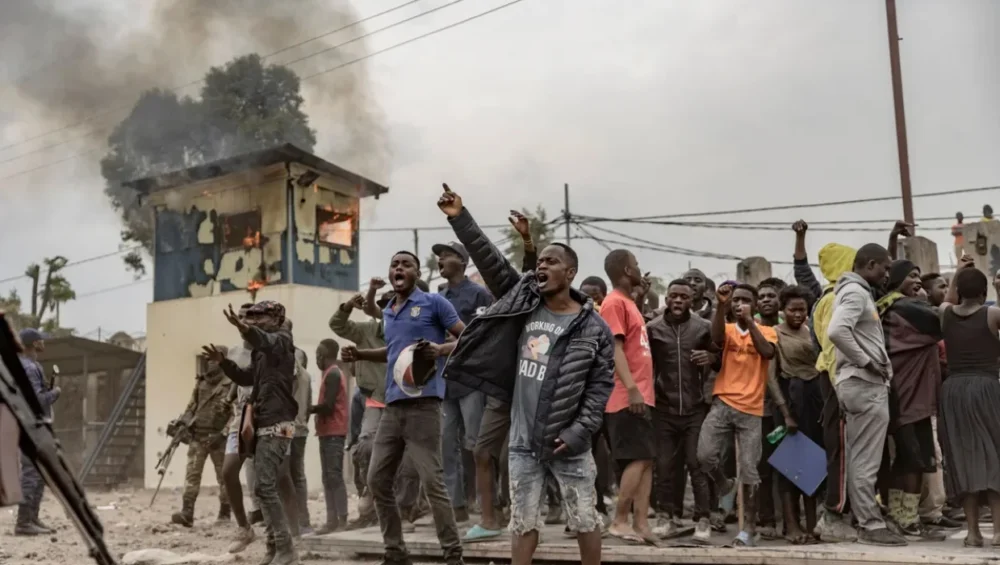
The militant activities in eastern Democratic Republic of Congo are growing stronger in 2025 as armed communities capture control of remote districts. They exist on the basis of decades of tensions over land ownership, marginalization by the state, and military conflicts over the valuable areas with resources. Different groups like the Allied Democratic Forces and the different Mai-Mai groups have been able to use weak institutions and divided state power to gain control. The government of Canada recognized in February 2025 that some areas were administratively inaccessible, and this indicated the profound security vacuum.
The patterns of operation of these militias involve the force of controlling the civilian populations by capturing taxes and imposing ransom, kidnappings, and attacks. Local observers say that militants are progressively adopting violent displays of force to ensure that inhabitants comply with the government forces or peacekeeping forces that act within the updated mandate of MONUSCO.
Ethnic And Resource Dimensions
Unrelenting ethnic insecurities determine the territorial desire of militia groups which causes confrontations between groups of people that have historical scores to settle. Those who monitor violence in North Kivu report that militia fighters arm ethnic discourses to recruit and legitimize assaults.
Resource Competition And Financing
The militants take advantage of the mineral resources in the region by working the artisanal mines in the production of coltan, gold and cassetite. These locations are financial centres where illicit tax is used to fund arm purchase and recruitment.
Economic Pressures On Villages
The people living in the disputed areas state that they are coerced to pay taxes on the crops gathered, transportation channels, and even the humanitarian aid packages. This has decreased household income and had more food insecurity.
Escalation Through Local Rivalries
It is aggravated by ethnic rivalries where militias affiliate themselves with certain groups of communities as they strive to gain a stronghold. This type of alliance adds more divisions and complicates the process of reconciliation.
State Fragility And Security Challenges
The government forces are experiencing gaps in their operations in trying to regain presence in the eastern territories. In response, the armed actors are difficult to coordinate due to the logistics limitations, the roughness of the terrain and their fragmentation. Even though the national army has been undertaking joint operations with regional partners in the East African Community initiative, these gains are short lived.
The transition plan of MONUSCO to lessen the footprint of the mission in 2025 imposes continued pressure on the national forces. Peacekeepers still assist in civilian protection and exchange of intelligence but are limited as a result of security threats and politics surrounding the presence of foreign troops.
Civilian Impact: Deaths, Displacement, And Destruction
Civilians have become the greatest casualties as the militants continue to gain additional territory. In the first half of 2025, local civil society organizations reported frequent attacks on villages in Ituri and North Kivu that led to massive deaths. According to UN investigators, there was evidence of systematic violence against the non-combatants, such as mass killings of people in remote settlements.
Violence has led to a tremendous displacement. Over two million individuals displaced, approximately one million between January 2025 and September, fled their living quarters and headed to congested camps or into the neighboring nations. Dislocation leads to food, shelter and medical shortages among the displaced. According to aid workers, children are especially susceptible to disease and malnutrition.
These issues are intensified by destruction of infrastructure. The damage and abandonment of schools, health posts and local markets have occurred as a result of militant incursions. Little to no livelihoods are supported as residents report massive looting of grain stores and livestock.
Infrastructure And Economic Disruption
Road and bridge attacks interfere with the flow of goods and humanitarian supplies. The fear of being ambushed makes the major routes avoided by the operators thus making the local products expensive and trading becomes hard.
The agricultural activities have also been reduced since farmers are abandoning the fields around the areas of conflict. According to analysts, the economic effects of this decline in food production will be felt long term especially in the provinces where the major source of income is farming.
With the instability, criminal networks that work together with militias take advantage of the situation and traffic minerals, timber and wildlife. This contributes to parallel economies that undermine good governance and intensify corruption.
Humanitarian Response Limitations
Emergency programs in eastern DRC still continue to grow by humanitarian agencies but they are not easily accessed. In mid-2025, a number of organizations suspended field missions following recurrent security incidents. According to UN humanitarian personnel, the relief columns were facing armed roadblocks where the militias were either demanding money or sealing off the supplies.
Remote communities get the attention of medical teams through mobile clinics, but all of them are not sufficient to address all needs. Aid organizations stress on the fact that the measures of safety levels are crucial to the intensification of life-saving activities. Several shelters where displaced families stay are over-congested, exposing them to disease outbreaks like measles and cholera.
International And Regional Responses
The collaboration between the regions has been enhanced due to the fact that the countries in the region have emphasized the danger of security spillovers across the borders. The early 2025 diplomatic contacts were aimed at the revitalization of demobilization efforts and deepening intelligence-sharing. Some of the leaders of militias have been arrested by working together but analysts warn that division among armed groups retards the process.
Funding commitments on stabilization programs were also renewed by international partners, but global crises and humanitarian scenarios compete, which means there are funding gaps. The donors emphasize the necessity to unite security activities with governance and justice reforms.
Emerging Trends In Conflict Resolution
Community-led mechanisms that empower the traditional leaders and communities are becoming more popular by the peacebuilding actors. The initial progress was achieved through dialogue forums held in eastern districts in 2025 to reduce the local tensions. These programs deal with property issues, youth involvement and reconciling programs that are meant to rebuild the confidence between the communities.
There is also the growth of digital conflict-tracking platforms, where local monitors are able to report the incidents in real-time. An early warning system assists the humanitarian agencies to divert personnel and resources to secure locations.
Justice And Accountability Efforts
The local courts that have international partners still handle the cases that involve militia violence. The testimonies of the survivors have solidified the demands to implement more programs on accountability and reparations.
Strengthening Local Governance
Governments have started educating local administrators so that they enhance administration potential in recovery regions. It is believed that the effective governance structures will play a critical role in avoiding re-militarization of rural areas.
Reintegration Barriers
The former combatants have few employment opportunities and lack resources to support the reintegration programs in the long run. This void adds the chances of re-enlistment into military formations.
Challenges To Sustainable Peace
The long term peace would demand that the structural factors that facilitate the growth of militants are dealt with. Absence of governance, marginalization of the economy and proliferation of arms is still destabilizing. In the absence of thorough reforms, the conflict dynamics will keep prevailing in the short term despite short term security benefits.
The future of eastern DRC in 2025 is indicative of the necessity of the legacy of insecurity and increasing humanitarian burden of militant growth. The next few months will show whether integrated diplomatic, military, and community-based activities could help to change the long-term pattern of the violence in the region or whether the fundamental systemic changes are the key to the long-term transformations.