
The Chad trafficking crisis Mullally assessment has sharpened international focus on a country grappling simultaneously with mass displacement, extremist violence, and entrenched governance weaknesses. On February 26, 2026, Siobhán Mullally concluded a 10-day fact-finding visit, calling for sweeping reforms to address what she described as “persistent impunity and structural vulnerabilities” enabling trafficking networks to flourish.
Mullally acknowledged progress, including the implementation of Presidential Ordinance 006/18 mandating prosecutions and the establishment of the National Commission to Combat Trafficking in Persons. She also highlighted the National Action Plan integrating prevention, protection, and prosecution. Yet she emphasized that without eradicating corruption in law enforcement and strengthening judicial independence, preventive frameworks would remain fragile.
Her forthcoming June 2026 report to the Human Rights Council is expected to detail consultations with Chad’s Justice Ministry, national human rights bodies, and UN agencies. The timing coincides with intensified scrutiny following Chad’s placement on the Tier 2 Watch List in the 2025 U.S. Trafficking in Persons Report, signaling moderate but insufficient progress toward minimum standards.
Engagement with refugee-hosting regions
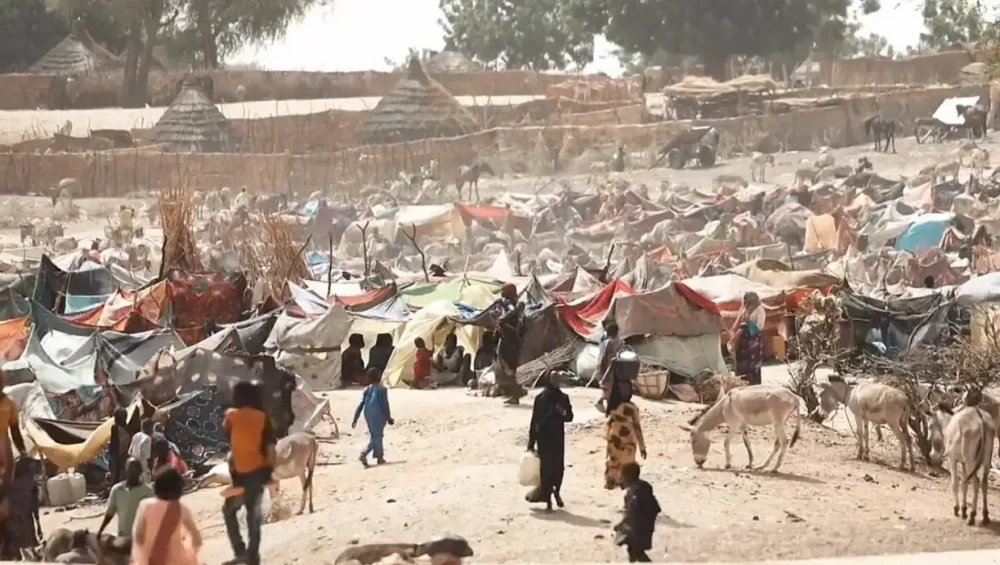
Mullally’s itinerary included visits to eastern camps sheltering approximately 1.18 million Sudanese refugees who have fled the conflict that erupted in April 2023. She also met with communities hosting more than 94,000 Chadian returnees displaced by instability in the Central African Republic and the Lake Chad Basin.
Discussions in Koumra and Ared identified child trafficking hotspots linked to poverty, orphanhood, and school dropout rates. Local officials reported increased cases of sexual exploitation and forced labor in camp environments, where overstretched services struggle to identify and assist victims.
Reform priorities emerging from consultations
Preliminary recommendations centered on security sector vetting, improved case management systems, and expansion of victim shelters. Mullally stressed that corruption must be addressed systematically, noting that bribes and political interference undermine investigations in roughly half of reported cases, according to civil society audits reviewed during the mission.
Refugee vulnerability dynamics intensify risks
Chad’s hosting of 1.35 million refugees and returnees represents one of the highest per capita burdens globally. Women and children constitute approximately 70 percent of new arrivals, increasing exposure to exploitation in contexts where livelihoods are scarce and protective mechanisms are thin.
In 2025, humanitarian agencies documented at least 200 reported trafficking-related incidents in refugee settings, though underreporting remains a major concern. Survivors cited sexual exploitation, domestic servitude, and forced labor in informal mining sites as dominant patterns. Smuggling networks have adapted to exploit those seeking passage toward North Africa or urban centers within Chad.
Camp-based exploitation and gendered risks
Under-resourced camps have become recruitment grounds for traffickers who promise employment or safe relocation. Girls face heightened vulnerability to sexual violence and early marriage, often tied to debt bondage arrangements. Aid workers report that stigma and fear of retaliation deter victims from filing complaints.
Protection coverage extends to only about 40 percent of identified victims, reflecting capacity constraints. Shelter infrastructure expanded in 2025 to accommodate roughly 4,000 individuals annually, yet occupancy rates hover near 70 percent, suggesting limited buffer for future surges.
Cross-border smuggling corridors
Porous borders facilitate blending of migrant smuggling and trafficking operations. In artisanal gold mining regions, traffickers coerce refugees and impoverished locals into hazardous labor. Law enforcement sources indicated that 60 percent of child trafficking victims in 2025 were exploited in agriculture and mining sectors.
These economic drivers intersect with extremist financing networks, compounding enforcement challenges.
Child trafficking and armed group recruitment
Child trafficking remains central to the crisis. Approximately 45 percent of children aged five to fourteen in Chad are engaged in labor, according to baseline data still reflected in 2025 assessments. Poverty accounts for nearly 80 percent of documented trafficking cases, creating fertile ground for recruiters linked to extremist groups.
Extremist recruitment pipelines
In the Lake Chad Basin, Boko Haram and Islamic State West Africa Province continue abducting children for combat roles and logistical support. Regional security data recorded more than 600 violent incidents in 2025, with child abductions comprising around 15 percent. Multinational Joint Task Force operations rescued approximately 300 victims, but terrain and coordination gaps limit broader impact.
Extremist groups reportedly derive up to 40 percent of operational funding from trafficking-related activities, including forced labor and ransom schemes. Mullally urged basin-wide intelligence-sharing protocols to dismantle these pipelines more effectively.
Domestic labor and sexual exploitation
Beyond armed recruitment, domestic servitude and commercial sexual exploitation persist in urban centers. Girls displaced from rural areas are frequently placed in informal households where abuse goes unreported. Law enforcement raids in 2025 liberated about 500 children from hazardous work sites, yet conviction rates remain modest.
Institutional progress and persistent gaps
Chad’s anti-trafficking architecture has expanded in recent years. The National Commission established data platforms in late 2025, aggregating nearly 10,000 tips and facilitating inter-ministerial coordination. Prosecutions rose by 20 percent compared to 2024, reaching approximately 150 convictions.
However, conviction rates relative to investigations remain low, at roughly 25 percent. Judicial backlogs average 18 months per case, and staffing shortages leave nearly 30 percent of judicial posts vacant. Training initiatives supported by the United Nations Office on Drugs and Crime reached 300 officers in 2025, but rural coverage remains uneven.
Corruption as structural impediment
Transparency assessments place Chad near the lower end of global rankings, reflecting systemic vulnerabilities. NGO audits estimate average bribe demands at around CHF 500 for case dismissals in certain jurisdictions. Presidential purges in 2025 removed approximately 200 security officers, yet only 20 percent of border agents have undergone comprehensive vetting.
Mullally emphasized that “without credible accountability mechanisms within law enforcement, anti-trafficking legislation cannot achieve its intended deterrent effect.” Donor conditionality increasingly ties funding to demonstrable anti-corruption measures.
International oversight and Watch List pressures
Chad’s Tier 2 Watch List status in the 2025 U.S. Trafficking in Persons Report underscores incremental but insufficient compliance with minimum standards. The report cited identification of roughly 1,000 suspects and increased awareness campaigns reaching half a million people. Nonetheless, shelters and victim services remain underfunded.
Exit from the Watch List in 2026 hinges on sustained conviction growth and expanded victim support systems. Prevention funding rose by 15 percent in 2025, targeting school-based awareness in high-risk zones such as Koumra and Ared. Yet without deeper institutional reform, international partners caution that gains could plateau.
Regional coordination frameworks under the Lake Chad Basin Commission have begun integrating trafficking into broader counterterrorism strategies. Donor conferences in 2025 pledged approximately $100 million for justice sector reforms, linking trafficking prevention with anti-extremism objectives.
Governance resilience amid displacement waves
The Chad trafficking crisis Mullally analysis situated trafficking within a broader matrix of displacement, poverty, and insurgency. As Sudan’s conflict continues to drive refugee flows and extremist groups adapt their recruitment tactics, governance resilience becomes a decisive variable.
Efforts to domesticate the Palermo Protocol more comprehensively and strengthen extradition agreements reflect awareness that trafficking networks transcend national boundaries. However, implementation gaps remain stark in remote provinces where state presence is limited.
Reform momentum now depends on whether anti-corruption drives can translate into consistent prosecutions and credible victim protection. Refugee-hosting communities face mounting strain, and extremist actors continue probing institutional weaknesses. The interplay between displacement pressures and justice reform will determine whether Chad consolidates recent progress or sees trafficking networks recalibrate to exploit enduring vulnerabilities in the months ahead.