
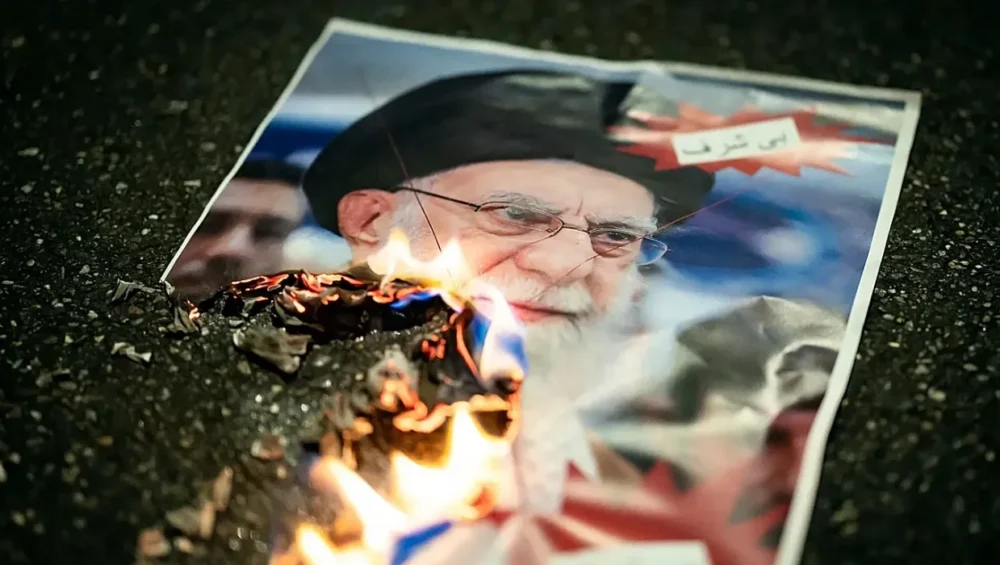
Now, eighteen days into Iran’s nationwide protests against its government, “the level of repression by the Iranian government has become alarming.” According to Iran Human Rights (IHRNGO), at least
“3,428 people have been killed since the beginning of protests, started on 28 December 2025, while thousands of others are injured.”
“The number of deaths reported in 15 provinces, mainly youth and teen protesters, shows Iran’s government is using intense violence against protesters.”
These numbers are probably low. Unconfirmed reports from various media organizations and intelligence estimates indicate that the number of dead may be substantially higher, estimated to be anywhere between 5,000 to 20,000. The Iranian government’s shutdown of the internet and overall control of information makes it extremely difficult to obtain confirmation of these reports.
Mass killings and the deliberate targeting of protesters
Accounts from eyewitnesses in various cities such as Rasht and Karaj indicate extreme brutality. At Rasht, protesters who had been cornered around the bazaar raised their hands in a peaceful surrender message, but were gunned down. At Karaj, eyewitnesses claim that security forces have been using heavy machine guns DShK against protesters, completing the job on the wounded and even taking pictures with corpses. The impression is that murder is not happenstance but a tactic.
The brutality is not only on the streets. It has been reported that wounded protesters were executed in hospitals in violation of foundational principles for international humanitarian law that protect wounded persons during conflicts.
Threat of mass executions
But the threat to the protesters is still ongoing. On 10 January, the Prosecutor General in Iran announced that all who participated in the protest are “mohareb” or “enemies of God,” an offense that is punishable by death. A few days after this threat, Iran’s judiciary chief, Gholamhossein Mohseni Ejei, called for speedy prosecution and execution.
“If the international community does not act in time,” IHRNGO Director Mahmood Amiry-Moghaddam says, “thousands more will be at risk of execution.” According to him,
“Iran is likely to follow a similar course of mass executions that happened during the 1980s,”
during which time
“the regime brutally suppressed opposition to seize power.”
Arrests, intimidation, and martial law
Aside from killings, Iran has also perpetrated mass arrest campaigns. Over 10,000 people have been arrested since the protests started. Many of them have been arrested in absentia, in other words, in lack of proper proceedings. The Iran Kurds region has also had its share of nighttime martial law operations, arbitrary checkpoints, and house searches.
Such a climate of fear has also been sustained by the almost complete shutdown of the internet in Iran since 8th January, which means that anyone who wants to express dissent or the findings of reporting is made incapable of doing so by the shutdown. NetBlocks have indicated that 99% of Iran’s internet is shut down in relation to accessing social media platforms, messengers, as well as critical websites.
Young and vulnerable victims
The toll of this crisis is appallingly youthful. The majority of those who were killed as protesters are under 30 years of age. The list of those who died is already known to include at least 15 minors. The killing of minors raises serious concerns about international juvenile rights as established by the CRC as Iranian laws commit their nation to this established international covenant.
The demographic representation mirrors the overall nature of the uprisings, which have been shown to be young and frustrated Iranian protesters voicing dissatisfaction with economic and political conditions as well as equality. Instead, it seems the government is turning the involvement of youth in political statements into a crime with overall societal implications.
Patterns of repression indicate a systematic campaign
The scale and coordination of the repression demonstrate Iran’s response is not reactive but planned. It has been confirmed that the same patterns of repression, threats, and press bans exist in different provinces, including Tehran, Rasht, Karaj, as well as in the Kurdistan provinces.
This conformity matches the broad historical observation of the use of state repression in Iran, such as the killing of dissidents, minorities, and women’s rights activists in the previous decades. The use of martial law, extra-judicial killings, and news blackouts indicates the intent to terrorize the people into conformity.
International human rights obligations at stake
Iran is a party to multiple international treaties, including the International Covenant on Civil and Political Rights (ICCPR), which guarantees freedom of expression, assembly, and life. The systematic killings, arbitrary arrests, and censorship of information constitute gross violations of these obligations.
The use of lethal force against surrendered individuals and minors may also amount to crimes against humanity under international law. The regime’s threat of mass executions further underscores the urgent need for international intervention, including sanctions targeting security and judicial officials responsible for repression.
Call for urgent international action
IHRNGO has called on the United Nations, the Security Council, and regional actors to intervene. Measures could include:
- Immediate condemnation of killings and threats of executions.
- Independent monitoring missions with unrestricted access to hospitals, detention centers, and protest sites.
- Targeted sanctions against Iranian officials and security commanders responsible for mass violence.
- Support for civil society groups and media to document abuses despite internet restrictions.
Delays in action risk creating a situation where thousands more Iranians could be executed or disappeared, and where the regime consolidates power through terror rather than dialogue.