
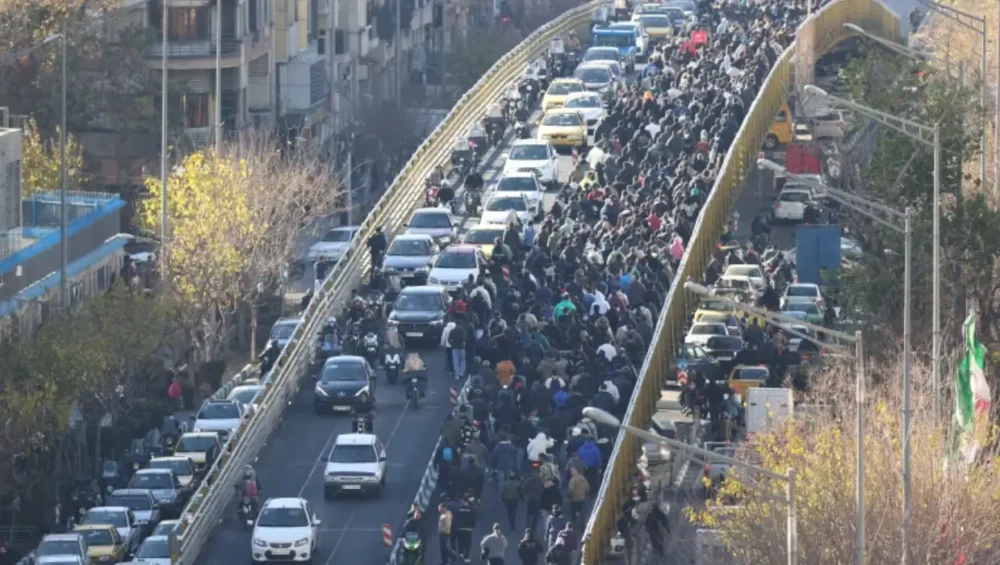
The wave of protests that erupted because of Iran’s ailing economy has spilled over into the provinces in rural Iran, where people are protesting inflation, depreciating currency, and just general living conditions. In the process, at least seven deaths have resulted, according to government reports.
These protests reflect growing discontent with the theocratic regime that has suppressed dissent as ordinary Iranians face deepening economic pressures. They are a signal that this protest movement could mark the most widespread rural unrest since the 2022 Mahsa Amini demonstrations; however, observers note the movement is still more localized at this time.
#Iran: We're following the ongoing protests, and reports of violence, with concern.@volker_turk: I call on the authorities to uphold the rights to freedom of expression, association and peaceful assembly. All individuals must be able to protest peacefully and express their… pic.twitter.com/Qam8zuT4xi
— UN Human Rights (@UNHumanRights) January 2, 2026
Who has been killed during these protests, and how?
The first reported fatalities occurred in four cities predominantly inhabited by Iran’s Lur ethnic group. Two deaths were reported on Wednesday, followed by five on Thursday.
- Azna, Lorestan province: State-linked Fars news agency reported three fatalities, while online videos showed fires, gunfire, and citizens shouting: “Shameless! Shameless!”
- Lordegan, Chaharmahal and Bakhtiari province: Videos show demonstrators on the streets amid gunfire. Independent human rights groups, including the Abdorrahman Boroumand Center, identified two deaths, both protesters, during clashes with police and paramilitary forces.
- Fuladshahr, Isfahan province: Activist sources reported a civilian killed after police opened fire on demonstrators.
Are these protests being criminalized despite being a basic right?
The protests are based on some economic-related complaints such as inflation and devaluation. However, it seems that emphasizing these protests with respect to economic conditions will have little impact on understanding these events since the Iranian authorities have characterized these protests as “rioting” and placed the blame for the deaths of some security forces on the protesters.
NEW STATEMENT: International Community Must Stand with Iranian People, Demand Accountability for Regime’s Escalating Repression https://t.co/rhkuHJTrS7
— Freedom House (@freedomhouse) January 3, 2026
For instance, a deputy governor in Lorestan province reported that a 21-year-old Basij volunteer died at the hands of protesters while it is reported that most deaths were unarmed civilians.
Human rights groups underline that peaceful assembly is a basic right, guaranteed by international law. The employment of deadly force against civilians exercising such a right is a violation of human rights, such as the rights to life, freedom of expression, and assembly.
How extensive is the crackdown on dissent?
Authorities have implemented a widespread crackdown:
- Arrests: 20 people were detained in Kouhdasht, with state media reporting additional arrests of monarchists and individuals linked to European-based groups.
- Confiscation of weapons: Security forces seized 100 smuggled pistols.
- Media suppression: State-linked outlets provide limited coverage, while independent journalists face harassment or arrest.
Observers note that military and paramilitary forces are targeting civilians rather than armed threats, raising alarms about violations of international humanitarian law.
What role does Iran’s broader political and military context play?
Iran’s government has come under pressure following regional events such as the war with Israel that lasted for 12 days in June. Economic sanctions and the poor state of the Iranian rial have also contributed to the protests.
There is talk of negotiation from Iranian President Masoud Pezeshkian’s administration, who admits to having no direct influence regarding the economic conditions in the country. It is further reported that public officials are classing citizens’ justified complains as threats to law and order.
Are international human rights norms being violated?
Targeted killing of protesters, aggression on civilian buildings, as well as indiscriminate use of fire arms, are violations of the Iranian national law as well as the principles laid out within the Universal Declaration of Human Rights: Inherent right to life, liberty, and security of person (Article 3), Freedom of assembly (Article 20).
The International Covenant on Civil and Political Rights (ICCPR): Iran must respect the rights of its citizens to peaceful assembly and avoid arbitrary killings. Experts point to the danger of violence by Iran sparking a further escalation, as this inspires fear and discourages protest. Amnesty and other human rights groups call for Iran to cease violence and release its prisoners.
The spread of the protest rallies to the rural provinces and the resulting crackdown with fatalities may prove to be a crossroads. The possibility of the regime continuing its assault on the civilians may see the levels of protest rallies escalating, with human rights abuses drawing international criticism.
Meanwhile, people are still insisting on having economic and political stability. The state’s use of violence fails to promote freedom and creates a dangerous precedent in the region.