
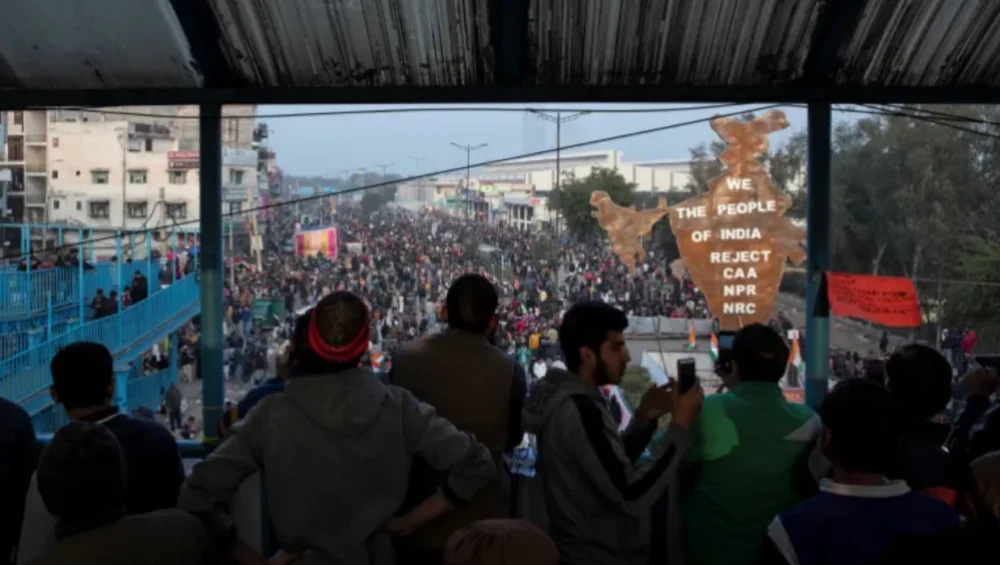
The Supreme Court of India recently granted bail to five Muslim students and activists who were imprisoned for over five years without trial in connection with the riots that shook the national capital in 2020. However, two high-profile scholars, namely Umar Khalid and Sharjeel Imam, were denied bail and have been continuing their imprisonment in Tihar Jail, raising serious alarm among rights groups.
For families like that of Shadab Ahmed, who had been granted bail, relief is tempered by anxiety for Khalid and Imam. “We are feeling very elated,” Ahmed’s father told Al Jazeera. “But our hearts sink for Umar and Sharjeel; they are also our sons.”
It is worrying that prolonged pre-trial detention is becoming normalized in India. The Supreme Court not only denied bail to Umar Khalid and Sharjeel Imam but has also imposed exceptionally restrictive conditions on any future bail applications.https://t.co/EIcWt9LIM7
— Amnesty India (@AIIndia) January 6, 2026
How did the citizenship law protests lead to mass arrests?
The case stems from India’s 2019 amendment to the Citizenship Act, which fast-tracked citizenship for persecuted non-Muslims from neighboring countries while excluding Muslims. The law spurred nationwide peaceful protests that included the highly visible Shaheen Bagh sit-in, also led by women, which became a symbol of minority resistance against discriminatory policies.
1/ HRF has submitted a formal complaint to the UN Working Group on Arbitrary Detention (UNWGAD) urging them to rule on the prolonged, unjust detention of Indian activist Umar Khalid, who has been held without trial for more than five years in Delhi's notorious Tihar Jail. pic.twitter.com/ucz2DGhMyH
— Human Rights Foundation (HRF) (@HRF) January 5, 2026
The protesters were attacked by violent right-wing mobs, leading to a riot that claimed the lives of more than 50 people, most of who were Muslims. The riot led to mass arrests with more than 2,000 people arrested, most of them under the Unlawful Activities (Prevention) Act or UAPA, an anti-terrorism law that provides for long-term incarceration before a suspect is charged.
Who are the activists detained under the UAPA?
The case has targeted student leaders and activists advocating for peaceful protest and minority rights. Among the detained:
- Umar Khalid – Former JNU scholar and student leader.
- Sharjeel Imam – JNU PhD researcher and former IIT Bombay graduate.
- Meeran Haider – JMI scholar in Management Studies.
- Gulfisha Fatima – MBA graduate and community activist.
- Shifa ur-Rehman – Jamia Millia Islamia alumni leader.
- Shadab Ahmed – Volunteer at Shaheen Bagh.
- Saleem Khan – Businessman accused of logistical support at protest sites.
Rights advocates argue that these individuals were targeted for exercising their right to peaceful protest, not for committing acts of violence.
Why is this case a human rights concern?
On the issue, Amnesty International India’s Aakar Patel stated, the continued detention of persons such as Khalid and Imam is shameful and politically motivated. Five and a half years pre-trial detention without a trial is a violation of the most basic human rights guarantees. The matter is considered representative of the overreach and suppression of dissent by the state.
Legal experts also noted that bail has been granted to violent criminals, casting some measure of doubt over the selective application of justice. The denial of bail to Khalid and Imam is an indication of biased justice, particularly in the areas of religion and political views.
How does prolonged detention affect freedom of expression?
The repression has induced a climate of fear among the students and the protest groups. Natasha Narwal, one of the former inmates, writes that the campuses have been thoroughly surveilled, and semester meetings, gatherings, and debates that criticize the administration result in punishment or criminal charges.
The culture perpetuates a lack of freedom of expression or academic freedom, which is an essential tenet to a functioning democracy. The expression of dissent is effectively rendered a crime, with a disproportionate impact on minorities.
Why were Khalid and Imam denied bail?
The Supreme Court explained its reasoning in relation to Khalid and Imam having a ‘central and formative role in the conspiracy.’ However, they can apply for bail only after one year or after all the witnesses have been questioned, which puts the accused at the mercy of the prosecution.
Senior Advocate Prashant Bhushan called it government influenced judicial decision-making, saying that it laid down a ‘dangerous precedent that could be abused to silence human rights defenders and minority voices through misused antiterrorism laws’.
What does this case reveal about minority rights in India?
The case has highlighted systemic issues affecting India’s Muslim population, including:
- Targeted use of anti-terror laws against peaceful dissenters.
- Prolonged pre-trial detention without substantive evidence.
- Unequal treatment under the legal system.
- Suppression of freedom of speech and assembly.
Rights groups argue that the ongoing detention of Khalid and Imam violates international human rights norms, including protections under the Universal Declaration of Human Rights andthe International Covenant on Civil and Political Rights, which India has ratified.
Can India uphold democratic principles while detaining activists indefinitely?
The case highlights the classic dilemma between the security of the state and the rights of the citizen. Long term detention before trial chips away at public confidence in the judiciary and calls into question India’s dedication to its founding principles of democracy and equality.
Human rights activists continue to demand that people arrested for exercising their right to peaceful assembly be released unconditionally. The activists stress that justice delayed is justice denied.