
Access barriers to life-saving help still exist due to severe limitations on humanitarian activity in active war zones by governments as well as armed forces. These limitations are manifested in the form of border closures, protracted permission procedures, and increased surveillance rates, which slows down or impedes the delivery of relief supplies.
In 2025, Houthi forces imposed greater restrictions on UN convoys on the movement of supplies in Yemen, arguing that it was a matter of security and espionage as Saudi-led airstrikes were repeated. The October 2020 update of the World Food Programme has stated that millions of individuals were left without a food distribution schedule due to delays, worsening the situation to famine levels.
The same trend has been realized in Sudan where conflict between the Sudanese Armed Forces and the Rapid Support Forces escalated until 2025. The approvals of aid missions have fallen by 40 percent since January by Medecins Sans Frontieres as organizations are forced to either drop routes or use options that are not financially viable.
Permit Delays And Bureaucratic Hurdles
The process of permit in Darfur and Kordofan has become a regular routine of more than 90 days in which emergency medical and sanitation services are paralyzed. Humanitarian workers state that the government constantly changes the requirements of documents, making it more unpredictable and limiting its scope of operation.
Such delays have led agencies to rely on unofficial agreements with local commanders to pass through, exposing staff to increased risks and making it difficult to meet international standards.
No-Fly Zones And Aerial Blockades
Restriction of airspace is now a characteristic of contemporary conflicts. In March of 2025, the International Committee of the Red Cross reported that no fly-ins or fly-outs could be carried out in eastern Ukraine by Russian forces which had moved the no-fly zones further west. Over 200 casualty transportation requests have been rejected, which had a great impact on the chances of civilian survival.
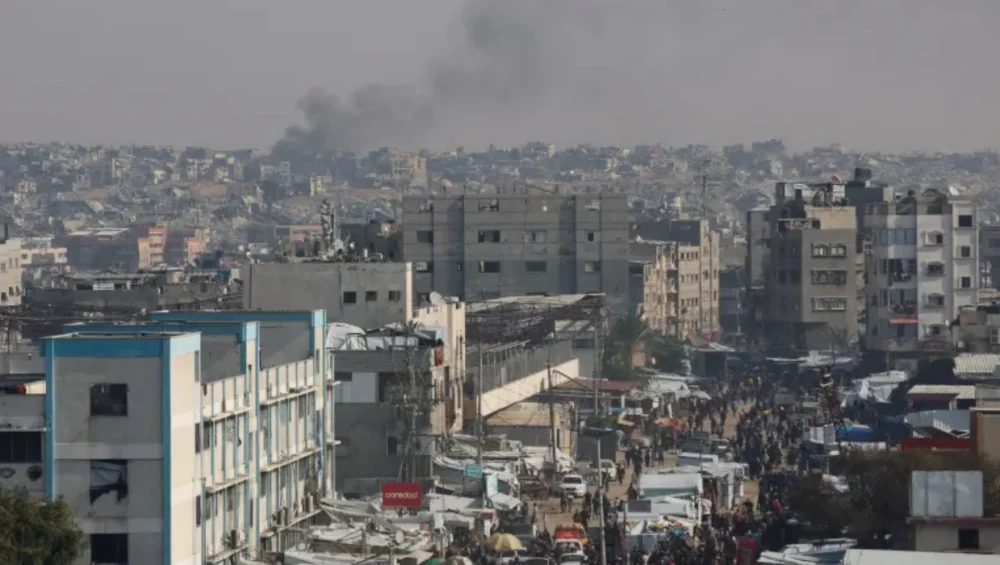
Further deterioration of the aid entry happened in Gaza due to intensified naval restrictions and air restrictions following October 2025 attacks. In November, Israeli Defense Minister Yoav Gallant wrote that the maritime restrictions were necessary to curb weapons smuggling, a reason that was repeated often in Knesset discussions. According to UNRWA, close to half of the intended activities were called off, and more than 300,000 tons of aid were rejected due to procedural reasons.
Legal Frameworks Under Strain
The Geneva Conventions indicate the clear duties to ensure humanitarian access. Nevertheless, the situation in 2025 demonstrates the lack of compliance exhibited on a large scale, with states referring to the prerogatives that the national security is supposed to have as an excuse to engage in restrictive policy. The extension of the UN Security Council Resolution 2720 on Gaza was blocked following a threat of veto, thus diminishing the enforcement, leaving the aid providers with little room to work.
Customary Law Violations
In June 2025, Syrian government forces in Idlib established checkpoint taxation on aid convoys at the expense of relief efforts. According to Human Rights Watch, such actions are against the Fourth Geneva Convention, in which Articles 18 and 19 are against arbitrary impediment to civilian assistance.
Sanctions And Unintended Impact
The cutoff of dual-use medical supplies, being an unintended consequence of sanctions by the United States and European Union against several non-state forces in the Sahel region. In July 2025, Oxfam discovered that Wagner-associated formations in Mali exploited compliance gaps to confiscate humanitarian stocks, claiming that they are imposing the law.
Case Studies From 2025 Conflict Zones
By mid-2025, ten million people were harmed by Sudan civil war, which made it one of the fastest-growing displacement crises in the world. Humanitarian access drastically reduced when the staff in Port Sudan authorities blocked that of foreign NGOs in May due to supposed intelligence leaks. According to the estimates given by UN OCHA, 20 percent of the identified communities received aid, which contributed to cholera outbreaks that took over 1,500 lives.
Gaza’s Intensified Blockade
After intensified tensions, the maritime blockade of Gaza was broadened to the restricted inspection ports of humanitarian flotillas. The limits led the agencies to go through intricate logistics routes, lengthening delivery durations and reducing the amount of authorized products.
Myanmar’s Humanitarian Exclusion Zones
Following the 2025 cyclone, Myanmar expanded its humanitarian exclusion zones into Rakhine State by its military. As the Arakan Army left the junta’s control, aid organizations contracted access to the country drastically. According to negotiations made by ASEAN, the stalled negotiations mean that over one million Rohingya and Rakhine civilians are unable to receive stable food or shelter assistance.
Geopolitical Drivers Behind Restrictions
Humanitarian access is still being utilized by major powers as bargaining in geopolitical talks. The announcement by Russia in August 2025, denying an extension of a Black Sea grain corridor, was an indication of the increasingly popular use of food security as a weapon. The political economy of China in the African conflict zones especially in the remnants of Tigray has also contributed to the direction of the government decision that puts less emphasis on the access of aid and more emphasis on the strategic infrastructure developments.
Information Control In Modern Warfare
The use of aid restrictions is increasingly being accompanied with a deep control of media in order to influence the narrative of conflict by non-state actors. In a 2025 survey by the International Crisis Group, it was observed that there is a marked decrease in atrocity reporting in Lebanon and Syria (with the assessment conducted by nine of them) as a result of organized obstructions initiated by armed groups.
Resource Competition And Territorial Extraction
In Democratic Republic of Congo, the need to control mineral deposits by armed groups has led to blocking of humanitarian flights and hijacking of aid stores. In August, UN sanctions monitors announced that M23 rebels were taxing humanitarian transport and that they were diverting supplies to coltan mining operations, strengthening local conflict based economies.
Operational Adaptations And Innovations
In order to circumvent formal obstacles, aid organizations extended networks with the community-level networks in 2025. Over 50,000 community relays were trained in Yemen to deliver supplies to conflict areas discreetly to lessen reliance on official checkpoints.
Technology-Driven Access Solutions
The use of drones became more and more widespread to provide aid, especially in Syria in the north where the ground routes were constantly blocked. Pilot programs by WHO used over 15 percent of vaccinations through drones, though Ukraine had reported a 30 percent increase in electronic jamming against operating frequencies.
Remote monitoring was made possible through satellite images of the inaccessible areas and enabled agencies to measure damages, displacement, food shortage without being on the ground.
Risk Management And Cost Challenges
In 2025, AI-driven threat-detection systems helped decrease ambushes of aid convoys by 18 percent in Afghanistan where the Taliban still had control over the country. Nonetheless, the withdrawal of insurers in conflict prone markets resulted in up to 200 percent increment of the operation premiums that restricted the viability of long-term programs.
Implications For Global Security
Increased restrictions are a contributing factor to mass displacement. According to UNHCR statistics of 2025, five million new refugees and internally displaced persons will be seen in conflict regions. The other neighboring states like Turkey and Jordan are under increasing pressure, which has brought about the issue of stability in the region and the allocation of resources.
As eight nations are nearing Phase 5 famine, the most serious forecasts have been linked through the early warning system costs to systematic denials of humanitarian access.
As the backroom dealing in Geneva on the initial outline of a proposed Global Humanitarian Access Pact, it is argued whether states will entertain the use of binding enforcement measures. The next year will determine whether technological creativity and regional collaboration can be of any significance to resist the new trends of hindrance, or the concept of humanitarian space will be further decreased along with the development of conflicts and the transformation of power relations.