
The United Nations General Assembly adopted a resolution on March 25, 2026, recognizing the transatlantic slave trade as the “gravest crime against humanity,” a milestone in Africa’s long push for historical acknowledgment.
Resolution’s Passage Dynamics
Ghana spearheaded the initiative, securing 123 votes in favor out of 193 member states. Only three nations: Argentina, Israel, and the United States voted against it, while 52, including the United Kingdom and all 27 European Union states, abstained.
Observers note that the overwhelming support signals growing solidarity among Global South nations, building on 2025’s preparatory diplomacy where African Union summits emphasized the moral and economic implications of historical injustices. Analysts stress that this level of cohesion reflects strategic use of multilateral institutions by African states to assert leadership on human rights and reparative justice.
Voting Alignments
African and Caribbean nations formed the resolution’s backbone, demonstrating cohesive lobbying from historically affected regions. The 54-member African Group presented a unified front, negotiating language that emphasized moral responsibility and educational redress. Western abstentions underscored persistent tensions over liability concerns, particularly regarding potential financial reparations and legal precedents.
Ghana’s Leadership Role
Ghana’s Foreign Minister Samuel Okudzeto Ablakwa framed the resolution as a pursuit of justice rather than monetary gain, advocating for educational programs and skills development for descendants. “Recognition is the first step; empowerment follows,” he stated in March 2026, emphasizing how historical acknowledgment intertwines with contemporary development imperatives.
Historical Context of Advocacy
Africa’s decades-long campaign traces to the 2001 Durban Declaration, which first conceptualized slavery as a crime against humanity. Renewed momentum emerged following the 2020 Black Lives Matter resurgence and 2025 CARICOM conferences, where regional leaders linked reparations to socio-economic inequalities in descendant communities.
The UN resolution references the enslavement of approximately 12 million Africans, highlighting persistent legacies in structural racism, exclusion, and poverty. Secretary-General António Guterres framed the issue starkly, asserting that Western prosperity “was constructed on the foundation of stolen lives and labor,” and urged states to dismantle barriers to rights and opportunities for affected populations.
Post-Durban Evolution
In 2025, Ghana hosted descendant forums, convening academics, civil society, and policymakers to feed into UN negotiations. These consultations highlighted the gap between symbolic recognition and practical reparations, including educational funding, infrastructure investment, and vocational training, linking historical wrongs to modern development deficits.
Non-Binding Yet Politically Potent
Though the resolution carries no legal enforcement mechanism, its political weight is significant. It encourages states to issue formal apologies, create reparations funds, and develop education programs, signaling a shift from symbolic recognition toward actionable initiatives.
UNESCO’s 2025 projects memorializing slave routes illustrate this approach, showing how international institutions can amplify truth-telling without mandating financial compensation. Human Rights Watch described the vote as a “major political achievement,” elevating global discourse on reparative justice and signaling a turning point in advocacy strategy.
Apology and Fund Mechanisms
The text urges member states to apologize and support reparations funds, reflecting CARICOM’s 2025 framework, which envisioned comprehensive redress encompassing health, education, and psychosocial support. Analysts note that such measures, while voluntary, could catalyze investment in descendant communities through public-private partnerships and bilateral aid.
Divergent Stakeholder Positions
The United States described the resolution as “highly problematic,” citing concerns over historical framing and potential litigation risks. Similarly, Britain’s Acting UN Ambassador James Kariuki recognized slavery’s “devastating consequences” but highlighted contemporary priorities such as human trafficking and forced labor.
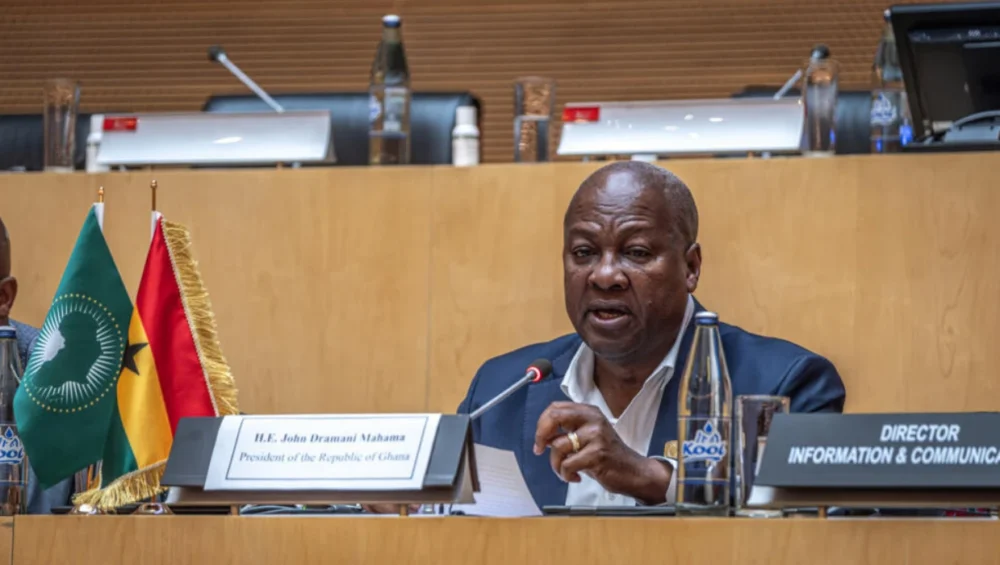
Ghana’s President John Dramani Mahama hailed the vote as “solemn solidarity,” a moment resonating with diaspora leaders like Dr. Erieka Bennett, who viewed it as ancestral acknowledgment and moral closure. Analysts argue these endorsements amplify the political legitimacy of Africa’s claims within global forums.
Western Reservations
Abstentions by European states reflect unease with focusing singularly on transatlantic slavery, amid debates over intra-African complicity and colonial-era wrongs. Critics warn that concentrating exclusively on one historical episode risks oversimplifying complex historical networks, but proponents see it as a necessary step to galvanize reparative mechanisms.
Reparations Debate Momentum
The UN vote injects urgency into reparations discussions, building on stalled 2025 U.S. congressional hearings on H.R. 40 and European parliamentary debates on colonial audits. The African Union’s 2025–2030 agenda explicitly prioritizes diaspora investment, potentially unlocking development finance framed as restorative justice.
While skeptics caution about diplomatic friction, supporters highlight opportunities for private sector endowments, corporate responsibility pledges, and bilateral aid packages to function as reparative instruments, creating tangible benefits for descendant communities.
Economic Implications
Advocates propose directing funds toward education, infrastructure, and healthcare in slave trade-affected regions. This mirrors 2025 German-Namibian reparations precedents, where negotiated agreements combined financial transfers with developmental programs. Analysts emphasize that linking reparations to capacity-building mitigates zero-sum tensions while delivering measurable outcomes.
Global South Diplomatic Shift
The resolution exemplifies Africa’s assertive multilateralism, leveraging numerical majorities enhanced by post-2024 UN reforms that amplified developing states’ influence. Observers note parallels with the 2025 Pact for the Future, where climate debt language advanced through similar coalitions, illustrating a pattern of securing historical redress through international diplomacy.
Broader Multilateral Trends
Caribbean nations are exploring analogous resolutions addressing indigenous genocides, suggesting an emerging template for historical accountability. This framework positions affected communities as both beneficiaries and stakeholders in international policy, reshaping how multilateral forums address past injustices.
Pathways Forward
Implementation hinges on follow-up mechanisms, including a proposed UN special rapporteur on slavery legacies, introduced in 2025 African Group working groups. National apologies, such as the Netherlands’ extended measures in 2025, may proliferate, while corporate pledges from firms historically tied to the slave trade could add a non-state dimension to reparative efforts.
Challenges remain in quantifying reparations. 2025 economic models estimate cumulative reparative obligations in the trillions, yet prioritizing development-focused investments circumvents zero-sum debates and delivers practical outcomes. Voluntary pledges may evolve into monitored commitments akin to the Sustainable Development Goals framework, creating a structured, accountable pathway for progress.
Africa’s long push now stands at a crossroads. Moral recognition confronts complex implementation challenges, diplomatic sensitivities, and economic constraints. As 2026 unfolds, whether this momentum translates into concrete educational, infrastructural, and social gains for descendants or remains largely symbolic will shape both regional and global debates over historical justice, accountability, and the potential for reparative diplomacy in a multipolar world.